
Sometimes a group needs a fictional situation to catalyse its thinking, focus its conversations, or use as a training exercise. Here are some examples and tips for constructing great fictions.
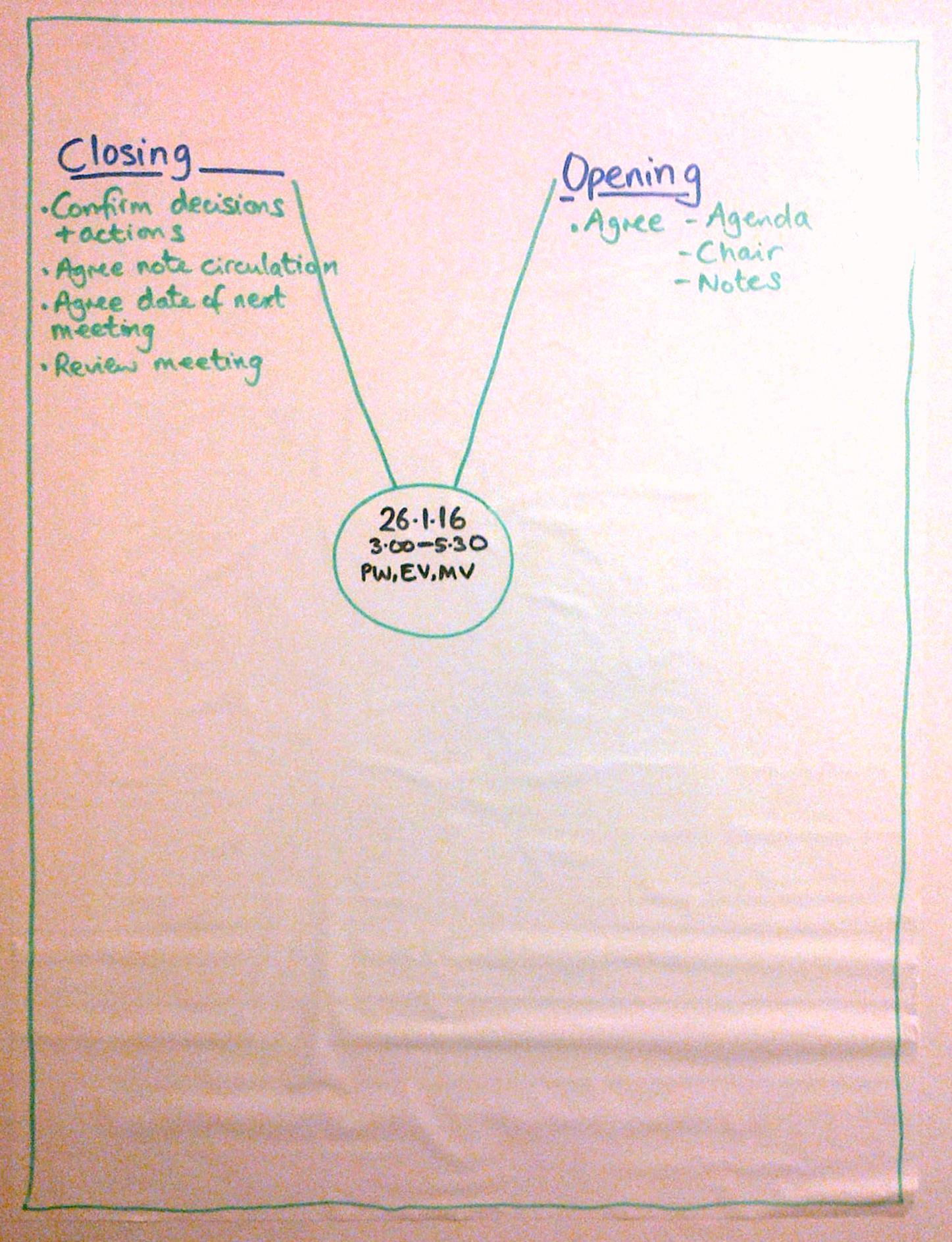
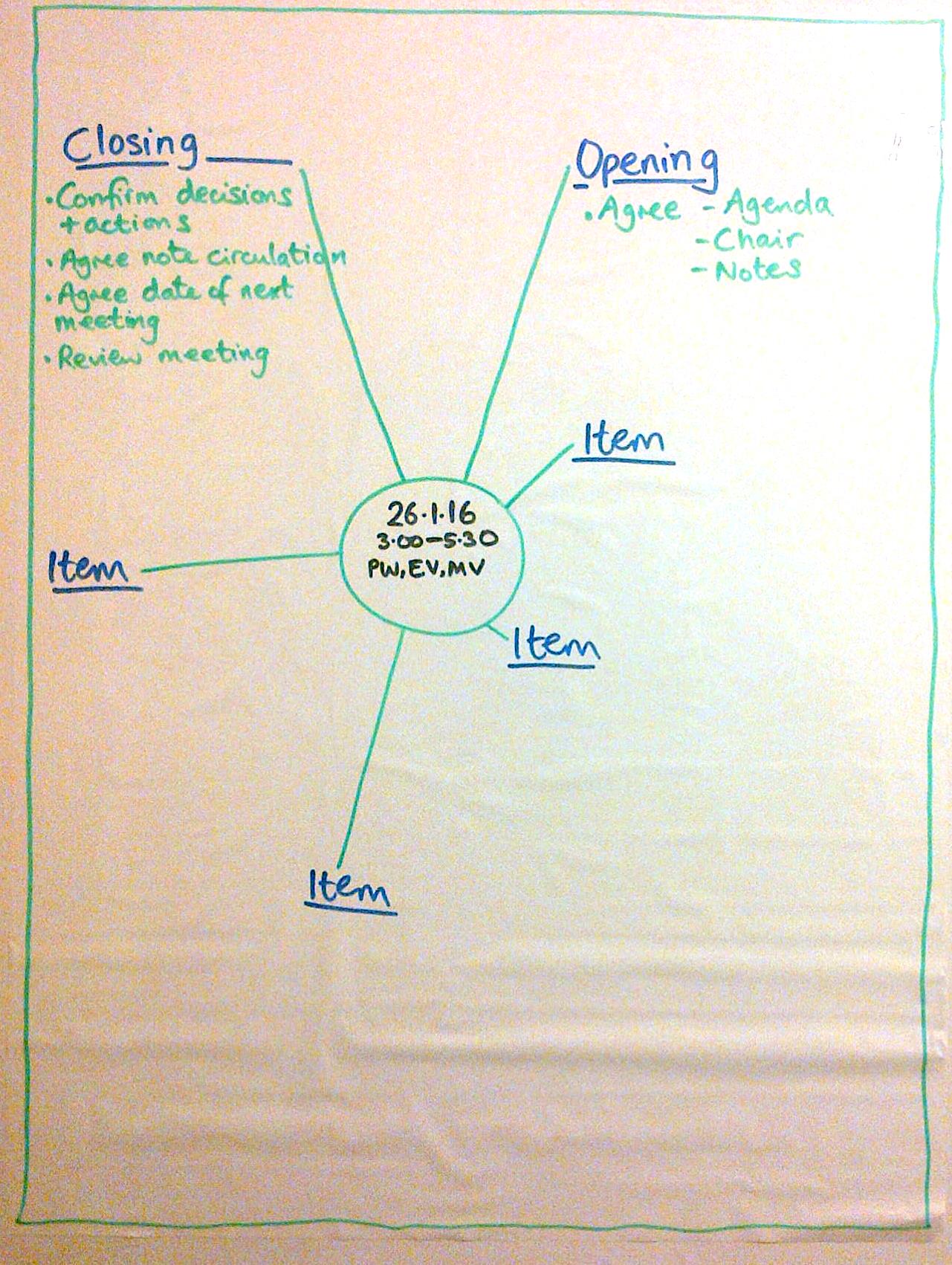
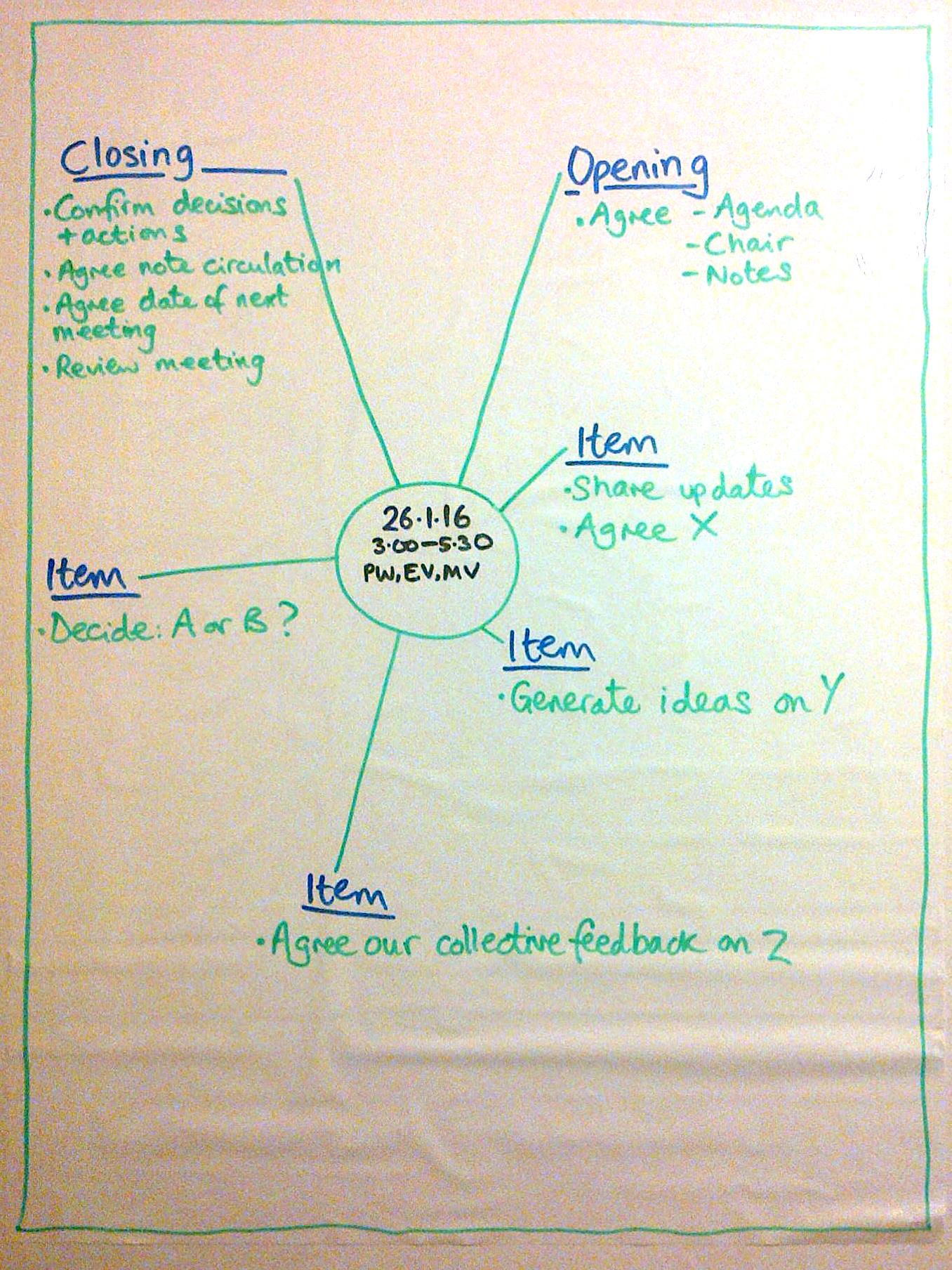
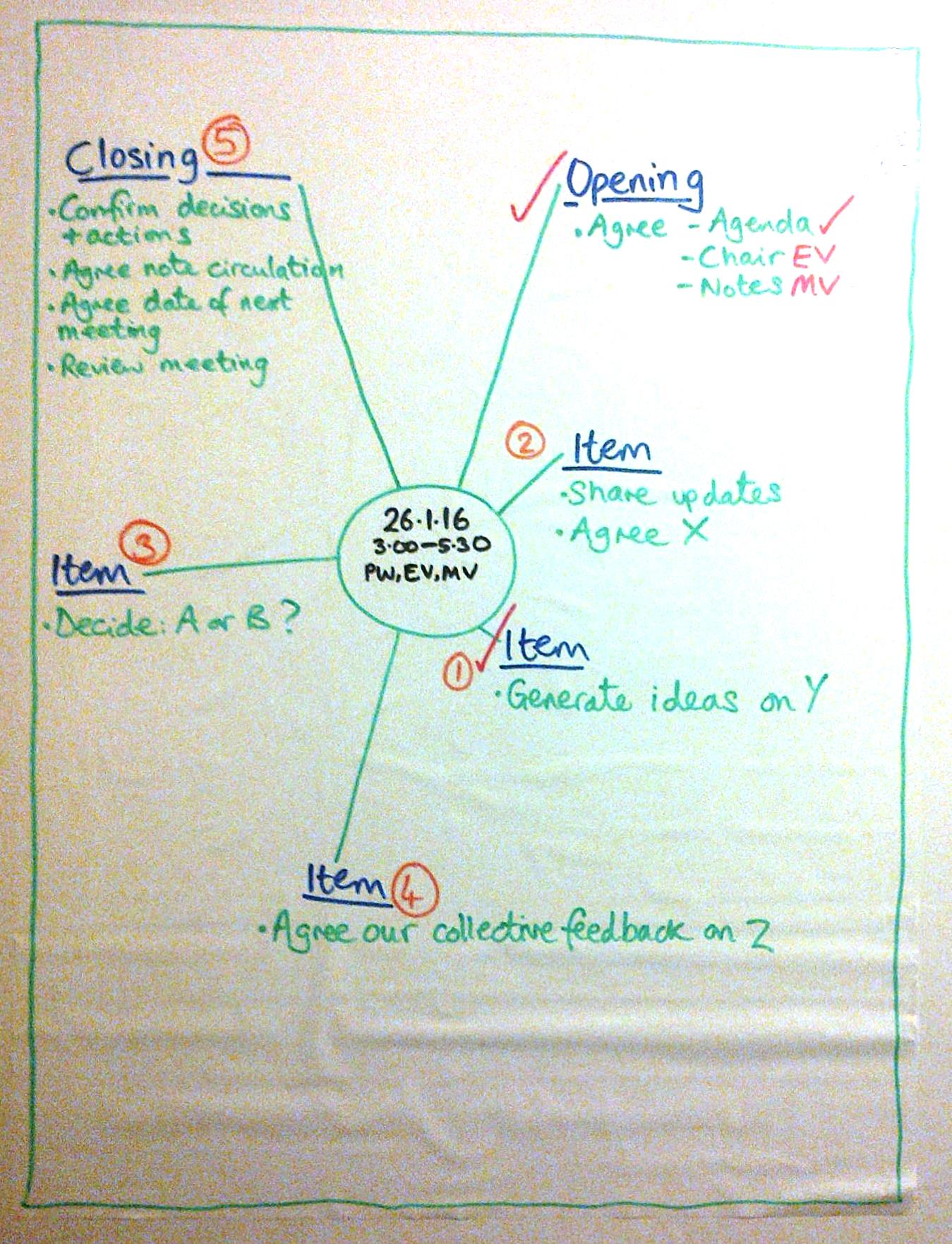
If you're involved in a local group - campaigners, activists, community action, faith group - there will be some really important things you want to achieve in the world. And you'll have some kind of team, committee, council or similar organising the activities behind the scenes. How are those meetings? Clear, engaging, effective? Or dull, interminable, frustrating, repetitive?
I've led a couple of two-hour training sessions this year for groups on how to run meetings which make clear decisions that stick. So that they can spend time on doing the stuff that really matters.
Here are the handouts from the workshop I ran in mid November.
If you think your group would benefit, get in touch to see what I can do to help you.
For over fifteen years, InterAct Networks worked to put stakeholder and public engagement at the heart of public sector decision-making, especially through focusing on capacity-building in the UK public sector. This work - through training and other ways of helping people learn, and through helping clients thinks about structures, policies and organisational change - helped organisations get better at strategically engaging with their stakeholders to understand their needs and preferences, get better informed, collaboratively design solutions and put them into practice. Much of that work has been with the Environment Agency, running the largest capacity-building programme of its kind.
InterAct Networks was registered as a Limited Liability Partnership in February 2002.
Founding partners Jeff Bishop, Lindsey Colbourne, Richard Harris and Lynn Wetenhall established InterAct Networks to support the development of 'local facilitator networks' of people wanting to develop facilitation skills from a range of organisations in a locality.
These geographically based networks enabled cross organisational learning and support. Networks were established across the UK, ranging from the Highlands and Islands to Surrey, Gwynedd to Gloucestershire. InterAct Networks provided the initial facilitation training to the networks, and supported them in establishing ongoing learning platforms. We also helped to network the networks, sharing resources and insights across the UK. Although some networks (e.g. Gwynedd) continue today, others found the lack of a 'lead' organisation meant that the network eventually lost direction.
In 2006, following a review of the effectiveness of the geographical networks, InterAct Networks began working with clients to build their organisational capacity to engage with stakeholders (including communities and the public) in decision making. This work included designing and delivering training (and other learning interventions), as well as setting up and supporting internal networks of engagement mentors and facilitators. We have since worked with the Countryside Council for Wales, the UK Sustainable Development Commission, Defra, DECC (via Sciencewise-ERC see p10), Natural England and primarily the Environment Agency in England and Wales.
Through our work with these organisations InterAct Networks led the field in:
diagnostics
guidance
tools and materials
new forms of organisational learning.
After Richard and Jeff left, Penny Walker joined Lindsey and Lynn as a partner in 2011, and InterAct Networks became limited company in 2012. In 2014, Lynn Wetenhall retired as a Director.
Through our work with clients, especially the Environment Agency, we have learnt a lot about what works if you want to build an organisation's capacity to engage stakeholders and to collaborate. There is, of course, much more than can be summarised here. Here are just five key insights:
An organisation which wants to improve its engagement with stakeholders and the public in the development and delivery of public policy needs capacity at organisational, team and individual levels.
This diagram, originated by Jeff Bishop, shows a cross-organisational framework, helping you to understand the levels and their roles (vision and direction; process management; delivery). If capacity building remains in the process management and delivery zones, stakeholder and public engagement will be limited to pockets of good practice.
There are half a dozen brilliant tools, frameworks and concepts which are enormously helpful in planning and delivering stakeholder and public engagement. Classroom training (and online self-guided learning) can do the job of raising awareness of these. But translating knowledge into lived practice - which is the goal - needs ongoing on-the-job interventions like mentoring, team learning or action learning sets. Modelling by someone who knows how to use the tools, support in using them - however inexpertly at first - and reinforcement of their usefulness. Reflection on how they were used and the impact they had.
People who are experienced and skillful in planning and delivering stakeholder and public engagement, and who are also experienced and skillful in designing and delivering learning interventions, make absolutely the best capacity-builders. They have credibility and a wealth of examples, they understand why the frameworks or skills which are being taught are so powerful. They understand from practice how they can be flexed and when it's a bad idea to move away from the ideal. We were enormously privileged to have a great team of practitioner-trainers to work with as part of the wider InterAct Networks family.
The way to identify the "learning intervention" needed, is to begin by asking "what does the organisation need to do differently, or more of, to achieve its goals?", focusing on whatever the key challenge is that the capacity building needs to address. Once that is clear (and it may take a 'commissioning group' or quite a lot of participative research to answer that question), ask "what do (which) people need to do differently, or more of?". Having identified a target group of people, and the improvements they need to make, ask "what do these people need to learn (knowledge, skills) in order to make those improvements?". At this stage, it's also useful to ask what else they need to help them make the improvements (permission, budget, resources, changes to policies etc). Finally, ask "what are the most effective learning interventions to build that knowledge and those skills for these people?". Classroom training is only one solution, and often not the best one.
Sometimes the capacity that needs building is skills and knowledge - things you can learn. So learning interventions (training, coaching, mentoring etc) are appropriate responses. Sometimes the capacity "gap" is about incentives, policies, processes or less tangible cultural things. In which case other interventions will be needed. The change journey needs exquisite awareness of what 'good' looks like, what people are doing and the impact it's having, what the progress and stuckness is. Being able to share observations and insights as a team (made up of both clients and consultants) is invaluable.
Over the years, some concepts and frameworks emerged as the most useful in helping people to see stakeholder engagement, collaboration and participation in a new light and turn that enlightenment into a practical approach.
I've blogged about some of these elsewhere on this site: follow the links.
As part of this wider suite of strategic and skills-based capacity building, InterAct Networks ran dozens of three-day facilitation skills training courses and helped the Environment Agency to set up an internal facilitator network so that quasi-third parties can facilitate meetings as part of public and stakeholder engagement. The facilitator network often works with external independent facilitators, contracted by the Environment Agency for bigger, more complex or higher-conflict work. This facilitation course is now under the stewardship of 3KQ.
Here are some other reports and resources developed by the InterAct Networks team, sometimes while wearing other hats.
Evaluation of the use of Working with Others - Building Trust for the Shaldon Flood Risk Project, Straw E. and Colbourne, L., March 2009.
Departmental Dialogue Index - developed by Lindsey Colbourne for Sciencewise.
Doing an organisational stocktake.
Organisational Learning and Change for Public Engagement, Colbourne, L., 2010, for NCCPE and The Science for All group, as part of The Department of Business, Innovation and Skills (BIS)’ Science and Society programme.
Mainstreaming collaboration with communities and stakeholders for FCERM, Colbourne, L., 2009 for Defra and the Environment Agency.
In 2015, Lindsey and Penny decided to close the company, in order to pursue other interests. Lindsey's amazing art work can be seen here. Penny continues to help clients get better at stakeholder engagement, including through being an Associate of 3KQ, which has taken ownership of the core facilitation training course that InterAct Networks developed and has honed over the years. The Environment Agency continues to espouse its "Working with Others" approach, with great guidance and passion from Dr. Cath Brooks and others. Colleagues and collaborators in the work with the Environment Agency included Involve and Collingwood Environmental Planning, as well as Helena Poldervaart who led on a range of Effective Conversations courses. We hope that we have left a legacy of hundreds of people who understand and are committed to asking great questions and listening really well to the communities and interests they serve, for the good of us all.
I've been helping organisations learn how to collaborate better. One of my clients was interested in boosting their organisation's ability to keep learning from the real-life experiences of the people who I'd trained.
We talked about setting up groups where people could talk about their experiences - good and bad - and reflect together to draw out the learning. This got me thinking about practical and pragmatic ways to describe and run learning sets.
An action learning set is – in its purest form – a group of people who come together regularly (say once a month) for a chunk of time (perhaps a full day, depending on group size) to learn from each other’s experiences. Characteristics of an action learning set include:
If you want to learn a little bit more about action learning sets, there's a great briefing here, from BOND who do a great job building capacity in UK-based development NGOs.
A different approach which has some of the same benefits might be a ‘debriefing group’. This is not a recognised ‘thing’ in the same way that an action learning set it. I’ve made the term up! This particular client organisation is global, so getting people together face to face is a big deal. Even finding a suitable time for a telecon that works for all time zones is a challenge. So I came up with this idea:
Neither approach is a ‘decision making’ forum, and neither approach is about developing case studies: they are focused on the immediate learning of the people who are in the conversation, and the insight and learning comes from what the people in the group already know (even if they don’t realise that they know it). In that sense they are 100% tailored to the learners’ needs and they are also incredibly flexible and responsive to the challenges and circumstances that unfold over time.
There's a typical pattern for sustainability change agents: enthusiastic spotting of an opportunity to change (a solution) followed by a flurry of activity and then the obstables begin to show themselves. Then it can go two ways:
reflecting on the 'stuckness', exploring it and finding a way beyond it,
giving up.
Actually, you need to see the obstacles clearly to be able to deal with them, but that doesn't stop people feeling downhearted if they'd set out imagining no obstacles at all!
I find it reassuring when a bit of theory (or framework, model, checklist) explains that the low points are predictable, expected and indeed part of the journey.
And theories can also help us make sense of a complex reality, find the patterns in chaos, see "what's really going on here" and understand our unconscious assumptions. If we bring them to conscious attention, we can make choices about doing things differently. Our assumptions might be about organisations (what they are, how they work, what's amenable to change), or people (how to interact respectfully whilst intending things to change) or sustainability (what might the journey look like, how you know you're going in the right direction).
And like the man said, there's nothing so practical as a good theory. (The man in question being Kurt Lewin, social psychologist, of the unfreeze-change-refreeze model.)
So I've assembled some bits of theory which I find particularly useful and popped them in a slide show here:
Organisational change theory 2011 generic
View more presentations from PennyWalker
There should be some notes pages with more explanation and references, but I haven't managed to get Slide Share to show these yet. So here's a pdf with the notes. This is a presentation I give at the fabulous Postgraduate Certificate in Sustainable Business course, developed and run by CPSL and Forum for the Future.
So theories are all very well, but what might it mean for your situation? I love to help people work out what their next steps might be, and a good way of doing this has proved to be the one-day Change Management for Sustainable Development workshop I developed and run with the IEMA.
We've got one in London on May 25th. So why not come along and we can help each other use some practical theories to make more progress? You can book here.
One of the things we do at the one-day Change Management training workshop is to look through a decision tree (aka flow chart) to see which approach to change might be most effective, given the starting point of each person on the course. Questions to ask yourself include:
The flow diagram is explained in this article, first published in the environmentalist.
The next workshop is on 20th July in Leeds - why not book to join us?
I was pointing people towards the six sources of influence in some behaviour change training recently, and went back to some original sources to remind myself about the distinctions between the six sources. To recap, the six sources are arranged into a two-by-three table, with ‘motivation’ and ‘ability’ divided into personal, social and structural. In this explanation on the VitalSmarts blog the two ‘social’ sources of influence have been merged. This bothered me – is there really so little distinction between social motivation (peer pressure) and social ability?
I was pointing people towards the six sources of influence in some behaviour change training recently, and went back to some original sources to remind myself about the distinctions between the six sources. To recap, the six sources are arranged into a two-by-three table, with ‘motivation’ and ‘ability’ divided into personal, social and structural. In this explanation on the VitalSmarts blog the two ‘social’ sources of influence have been merged. This bothered me – is there really so little distinction between social motivation (peer pressure) and social ability?
We have three dates in the diary for this one-day workshop, which I've been running since 2005. The day is very interactive, with everyone sharing a specific sustainability challenge which they are working on, and using various frameworks and exercises to explore and understand the challenge better.
During the workshop, people
As you’d expect, the contents have evolved since I ran the first one. But the approach is still one of making selected bits of change theory as accessible as possible to people, and giving them time to work on their own particular situation during the workshop. And everyone still gets a free copy of the workbook, so they can carry on making their own notes and using plenty more exercises and frameworks at their own pace.
If you'd like to come along, you can book through IEMA's website.
London: 28th April 2010
Leeds: 20th July 2010
Newcastle upon Tyne: 12th October 2010
I've been running a training course today, helping sustainable development specialists get some insights from the world of organisational change. As part of this, each person identified a sustainability challenge that's real for them and their organisation right now. One of the participants was grappling with how to get people from across the organisation to look at the sustainability impacts of the services they provide. This will entail having a much better understanding of what the social aspects of sustainable development are, and how you might measure or assess your performance on these aspects.
We came back to this question about the social aspects of sustainable development when looking at Dexter Dunphy's phases of organisational strategic engagement with sustainability. There's a pdf of a presentation summarising this here. One of the phases in this typology is ‘efficiency’.
If your focus is on the environment, it’s clear that this is about eco-efficiency or resource-efficiency. If your focus is the economic aspects of sustainability, then financial and labour efficiency (productivity) are easy concepts to grasp. But what does this mean when you are thinking about the social aspects?
With wonderful serendipity, I had just been reading Jonathon Porritt’s valedictory report, published yesterday. Jonathon recently stepped down as Chair of the UK Government’s Sustainable Development Commission, and in this report he examines what he calls the mystery of why sustainable development hasn’t been better embedded in the various strands of government in the UK. He blogs about it here and there's also a link to download the report.
As it happens, he provides a very useful summary of what social sustainability is and what efficiency means in that context. He does it so well, that I’ll quote at some length here.
The two overarching ends [of sustainable development, as articulated in the UK Government’s 2005 strategy] (“Living Within Environmental Limits”, and “Achieving a Strong, Healthy and Just Society”) require very different approaches. The test of “living within environmental limits” is a strictly empirical test: define the limit (as in concentrations of greenhouse gases in the atmosphere, for instance, or threshold limits for pollutants in the air or water), measure levels of compliance against these agreed limits, and then adapt policies accordingly. By contrast, “achieving a strong, healthy and just society” is a predominantly normative aspiration rather than an empirical test, with very different metrics and very different value judgements as to the weight that should be attached to different aspects of “strong, healthy and just”.
At the heart of the concept of sustainable development lies the concept of “dual equities”: inter-generational equity (living today in such a way that we aren’t ruining prospects for people tomorrow), and intra-generational equity (living today in such a way that we reduce – or even eliminate – current unsupportable inequalities in wealth, opportunity and broader entitlements).
In that respect, sustainable economic development means “fair shares for all”, ensuring that people’s basic needs are properly met across the world, while securing constant improvements in the quality of people’s lives through efficient, inclusive economies. “Efficient” in that context simply means generating as much economic value as possible from the lowest possible throughput of raw materials and energy.
…Once basic needs are met, the goal is to achieve the highest quality of life for individuals and communities, within the Earth’s carrying capacity, through transparent, properly regulated markets which promote both social equity and personal prosperity.”
This idea of efficiency in the use of the Earth’s carrying capacity to give as much social well-being as possible must mean, in some situations, redistributing carrying capacity from those who have an unfairly large share of it, in order that those whose needs are not being met can better meet their own needs. This is the case because it is not possible to ‘increase the size of the pie’ – we only have one planet.
The New Economics Foundation (NEF) produces the Happy Planet Index which uses official statistics to reveal, as they put it, “the ecological efficiency with which human well-being is delivered” in 143 countries covering 99% of the world’s population. (I know you want to know – the UK score is 43.3, the USA is 30.7, and Costa Rica is 76.1.)
I wonder how this approach could be used to measure performance in organisations?
The latest issue of the environmentalist includes an article I've written, entitled "who can help me make this change?". In it, I share an approach I've used successfully in training courses and (as my daughter would say) in true life: it helps people to systematically identify key internal and external players who can help them bring about the change they want to see. If a particular person or group are crucial to making the change happen, then you want them to be supportive of it. Ask them what they'd like to see happening, and how you can help them. Find common ground and enlist their support.
If someone is already very supportive, but not really needed, then see what they can do to influence or recruit those who are needed. Or enlist them to support you.
Remember, the art of engaging people to help create transformational change involves listening and letting go.
Well as promised, here are my thoughts having attended the morning of the IEMA Conference 09.
- I'd gladly hear Jonathan Porritt again. He talked about the need to get off the hedonic treadmill, and the challenge of getting marketeers to sell austerity. His slides are here. I'm intrigued that he found Dr Steven Chu's speech to the Nobel Laureate's symposium inspiring - because JP says the speech was about energy efficiency. And in the words of Theodore Roszack,
...prudence is such a lacklustre virtue.
I couldn't find a way to read, hear or watch Secretary Chu's speech (please let me know if you know of one) but the symposium site is here. The other insight which caused me to stop short is that, apparently, family planning is the single best intervention in reducing emissions of greenhouse gases, from a cost benefit point of view.
I didn't really understand what Lord Jenkin was trying to tell us. Insufficiently relevant, at least to this member of the audience. Sorry.
Peter Jones is always interesting, although his acrobatic mind can leave me behind sometimes.
The workshop I ran was an hour's worth on skills for change. I chose to focus on inter-personal influencing, through mirroring body language, asking facilitative questions, and sharing the six sources of influence that I learnt about through the 'all washed up' video which I've blogged about here.
The handouts from the session are here.
It was a lot of fun - it's amazing how quickly you can find three things that you have in common with a total stranger - and I hope stretched some people to think beyond 'awareness raising' as a way of influencing others.
I hope that it also helped people to be braver about networking later in the day, because making connections and building trust within a group such as this one, composed of IEMA members and fellow-travellers, will - in the long run - have far more impact than speechifying.
This Autumn's IEMA workshop, Change Management for Sustainable Development, will take place in Leeds in November. As you'd expect, the contents have evolved over the four years since I first ran one. But the approach is still one of making selected bits of change theory as accessible as possible to people, and giving them time to work on their own particular situation during the workshop. And everyone still gets a free copy of the workbook, so they can carry on making their own notes and using plenty more exercises and frameworks at their own pace. They can also use these exercises with colleagues and in teams, to help get insights from a broad range of perspectives, and to build a coalition of change agents.
From time to time I've been invited to work with Jane Ashton and her team at First Choice, now part of TUI Travel plc. Jane understands the importance of enabling sustainable development to leave the safe haven of the CSR team, and spread virally through the organisation. One way that First Choice encourages this is through tailored training for people in different parts of the organisation, whether they work in retail shops, in holiday destinations, liaising with local suppliers of accommodation and activities, or in teams that dream up the new products to sell to holidaymakers. I was delighted to be asked to work with Jane's team and the Travel Foundation to develop this training.
Once piloted by First Choice, the training courses and materials were made generic, so that any similar business in the sector could use them. This won't just help staff become more aware of sustainable tourism, it will also help them plan together how to rethink their own businesses to make them more sustainable.
You can access those training materials here.
There are quite a few courses on offer in the UK to help people speak in public more confidently, knowledgeably and effectively about climate change. This article which I wrote for the environmentalist examines two of them, focusing on the key points that the trainers are trying to get across.
I spend quite a lot of my time working with clients to engage stakeholders around topics related to sustainable development. This might be working with coastal communities to figure out how to respond to rising sea levels. It might be chewing over new approaches to public transport. Or it could be examining how the market for supplying domestic energy can be adjusted to reward companies for selling less energy or lower carbon energy.
I also run a lot of training courses for people who want to learn more about stakeholder engagement and to develop their facilitation skills.
DAD / EDD is one of the most useful models I know for helping learners and clients understand the difference between traditional communications - Decide, Announce, Defend (Abandon) - and an approach which engages stakeholders: Engage, Deliberate, Decide.
This article I wrote for the environmentalist, published in February 2009, explains a bit more.
